



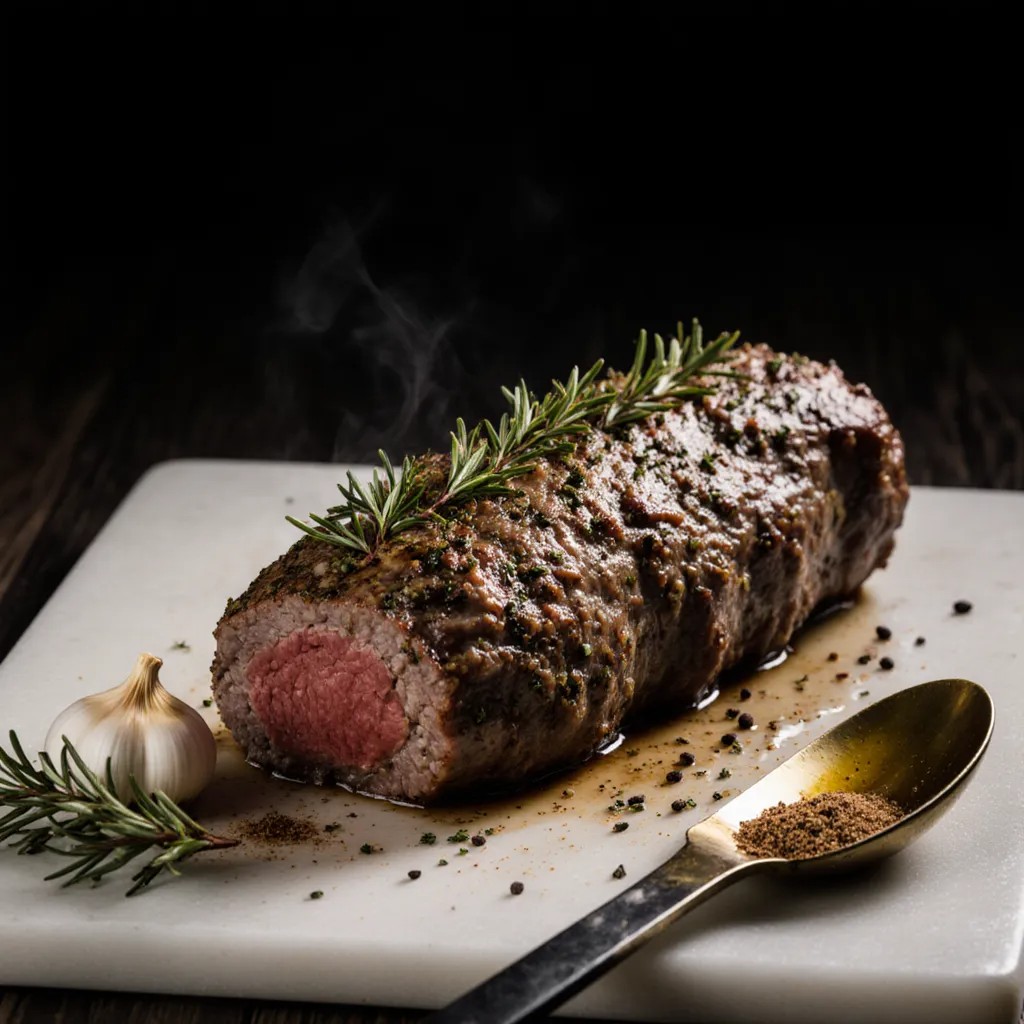
The Slow Roasted Beef Tenderloin is a showstopper, a dish that effortlessly marries simplicity with sophistication. Often reserved for special occasions, this method ensures your beef tenderloin emerges from the oven incredibly tender, perfectly juicy, and bursting with flavor from a fragrant herb and garlic rub. The low and slow roasting technique is the secret to achieving that melt-in-your-mouth texture, while a quick sear beforehand locks in the juices and creates a beautiful, savory crust. It’s a surprisingly straightforward way to achieve restaurant-quality results, making it an ideal centerpiece for holidays, celebrations, or any time you want to impress without the stress.
Ingredients:
For the Beef Tenderloin:
- 1 whole beef tenderloin (about 3-4 lbs / 1.3-1.8 kg), trimmed of silver skin and excess fat (you can ask your butcher to do this)
For the Herb & Garlic Rub:
- 3 tablespoons olive oil
- 4 cloves garlic, minced (about 1½ – 2 teaspoons)
- 2 teaspoons salt (kosher or sea salt recommended)
- 1 teaspoon freshly ground black pepper
- 1 teaspoon dried thyme (or 1 tablespoon fresh thyme leaves, finely chopped)
- 1 teaspoon dried rosemary (or 1 tablespoon fresh rosemary, finely chopped)
- 1 teaspoon onion powder
Instructions
- Preheat Your Oven:
- Set your oven to a low temperature of 250°F (120°C). This low heat is crucial for the “slow roast” method, which allows the beef to cook gently and evenly from edge to center, resulting in an incredibly tender and juicy outcome.
- Prepare the Beef Tenderloin:
- Begin by patting the beef tenderloin thoroughly dry with paper towels. Removing surface moisture is key to achieving a good sear later.
- In a small bowl, combine the olive oil, minced garlic, salt, black pepper, dried thyme, dried rosemary, and onion powder to create your herb rub.
- Evenly rub this aromatic mixture all over the entire surface of the beef tenderloin. Make sure every inch is coated for maximum flavor.
- Sear for Flavor and Crust:
- Heat a large, heavy-bottomed skillet (cast iron works exceptionally well) over medium-high heat until it’s very hot and just starting to smoke lightly.
- Carefully place the seasoned beef tenderloin into the hot skillet.
- Sear the beef on all sides (including the ends) for 2-3 minutes per side, turning with tongs. The goal is to achieve a beautiful golden-brown crust all around the tenderloin, which adds significant depth of flavor and visual appeal. This step should be quick.
- Remove the seared beef from the skillet.
- Slow Roast to Perfection:
- Place the seared beef tenderloin on a wire rack set inside a shallow roasting pan. This allows air to circulate around the beef for even cooking.
- Transfer the roasting pan to your preheated 250°F (120°C) oven.
- Roast for approximately 1.5 to 2 hours. The exact cooking time will depend on the thickness of your tenderloin and your desired level of doneness.
- Crucially, use an instant-read meat thermometer inserted into the thickest part of the tenderloin (without touching bone) to monitor the internal temperature.
- Remove from oven when the internal temperature reaches 125°F (52°C) for medium-rare.
- Remove from oven when the internal temperature reaches 135°F (57°C) for medium.
- Note: The temperature will rise by 5-10°F (3-5°C) while resting.
- Rest the Beef:
- Once the desired internal temperature is reached, remove the beef tenderloin from the oven.
- Immediately transfer it to a cutting board, cover it loosely with aluminum foil, and let it rest undisturbed for at least 15 minutes. This resting period is vital: it allows the muscle fibers to relax and redistribute the juices throughout the meat, resulting in an incredibly tender and moist final product. Do not skip this step!
- Garnish and Serve:
- After resting, slice the beef tenderloin into thick medallions (about ½ to ¾ inch thick).
- Arrange the slices on a serving platter.
- If desired, sprinkle with fresh thyme sprigs or finely chopped fresh parsley for a touch of color and aroma.
- Serve warm and enjoy the tender, flavorful beef!
Tips, Variations, and Storage
- Trimming: If your tenderloin isn’t pre-trimmed, remove the silver skin (a silvery membrane) with a sharp knife, as it doesn’t break down during cooking. You can also tie the tenderloin with kitchen twine every 2-3 inches to ensure an even thickness and uniform cooking, though it’s less critical with a slow roast.
- Herb Variations: Feel free to swap or add other herbs like fresh oregano, marjoram, or even a pinch of dried red pepper flakes for a subtle kick.
- Doneness: Always rely on a meat thermometer for perfect results. For well-done, target 145°F (63°C) before resting, but be aware it might sacrifice some tenderness.
- Pan Drippings: While this recipe focuses on the tenderloin, you can deglaze the skillet after searing with a splash of red wine or beef broth, then add to the roasting pan for extra flavor or to make a simple pan sauce (reduce on stovetop).
- Storage: Leftover beef tenderloin can be stored in an airtight container in the refrigerator for up to 3-4 days. It’s delicious cold in sandwiches or gently reheated.
Pairings
Slow Roasted Beef Tenderloin is a sophisticated main course that pairs beautifully with a variety of accompaniments:
- Wine: A robust red wine such as Cabernet Sauvignon, Merlot, Pinot Noir, or a Bordeaux blend.
- Starchy Sides: Creamy mashed potatoes, roasted potatoes (especially garlic and rosemary roasted potatoes), creamy polenta, or a wild rice pilaf.
- Vegetables: Roasted asparagus, green beans with almonds, sautéed spinach, glazed carrots, or a medley of roasted root vegetables.
- Sauces: While delicious on its own, it also pairs well with a mushroom sauce, red wine reduction, Béarnaise sauce, or a horseradish cream.
- Salad: A simple, fresh green salad with a light vinaigrette to cut through the richness.
Quick Info
- Prep Time: 15 minutes
- Cook Time: 1.5 – 2 hours (plus 15 min rest)
- Total Time: Approx. 1 hour 50 minutes – 2 hours 35 minutes
- Servings: 6-8 (depending on portion size and tenderloin weight)
- Cuisine: American / Classic European-Inspired