



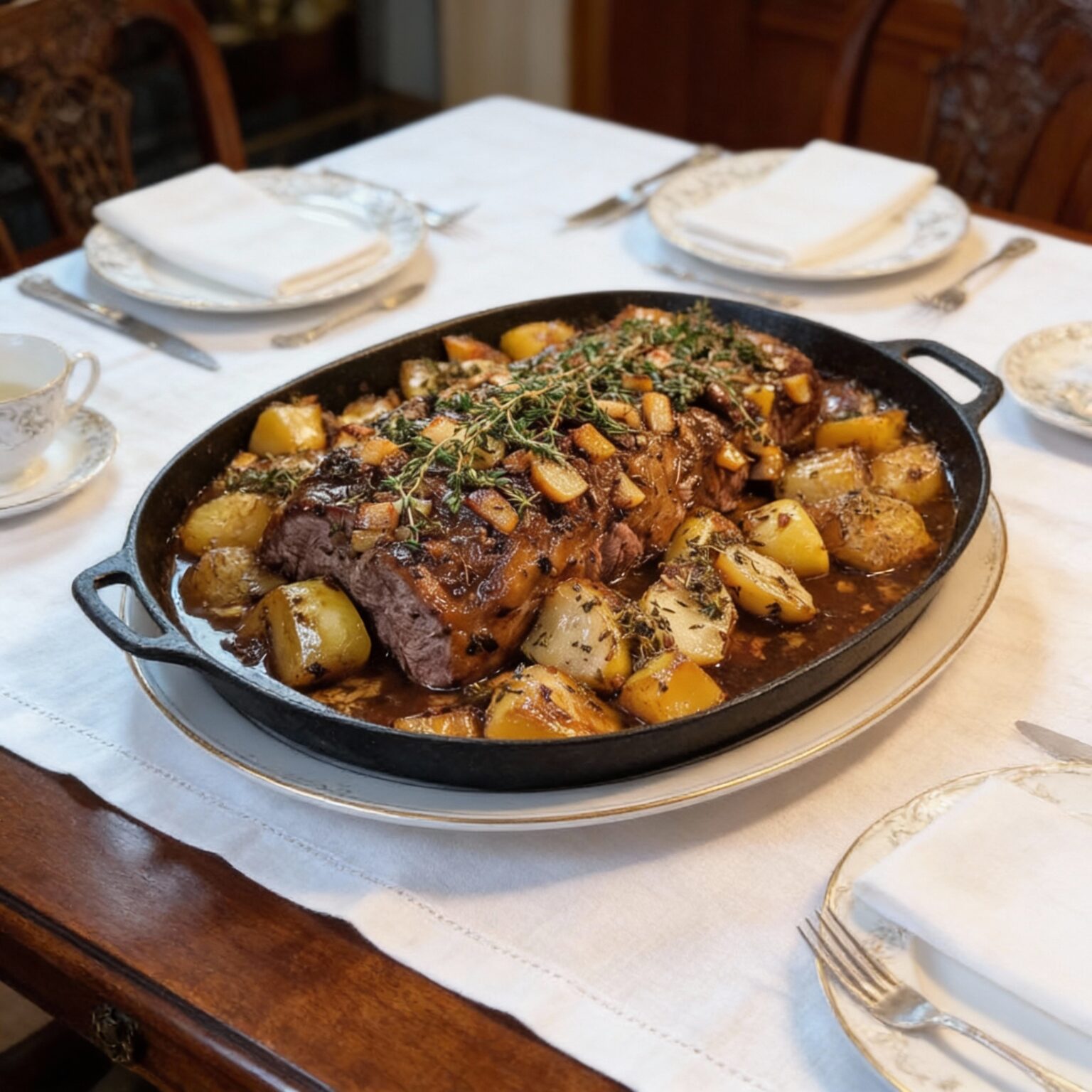
Elevate your dinner table with a magnificentGarlic Herb Beef Roast– a truly special dish that promises tender, flavorful meat with a perfectly golden, aromatic crust. This recipe celebrates the rich, savory taste of beef, infused with a potent blend of fresh garlic and fragrant herbs, slow-roasted to melt-in-your-mouth perfection. Whether it’s the centerpiece of a holiday meal, a celebratory dinner, or a comforting Sunday supper, a beautifully roasted beef joint is always a showstopper. Paired with its own luscious pan gravy, this dish is an ode to classic comfort and culinary craftsmanship, designed to impress with every succulent slice.
Ingredients:
For the Beef Roast:
- 3-4 pound boneless beef roast (eg, top round, bottom round, sirloin tip, eye of round)
- 2 tablespoons olive oil
- 6-8 cloves garlic, minced (or 2 tablespoons pre-minced)
- 2 tablespoons fresh rosemary, finely chopped (or 1 tablespoon dried)
- 2 tablespoons fresh thyme, finely chopped (or 1 tablespoon dried)
- 1 tablespoon Dijon mustard (optional, but adds depth and helps crust)
- 1 1/2 teaspoons salt
- 1 teaspoon freshly ground black pepper
For the Roasting Pan (Optional, for flavor & aromatics):
- 1 large onion, quartered
- 2 carrots, roughly chopped
- 2 celery stalks, roughly chopped
For the Pan Gravy:
- pan drips from the roast
- 2 tablespoons unsalted butter (if drippings are scarce)
- 2 tablespoons all-purpose flour
- 2 cups beef broth (low sodium preferred)
- Salt and pepper to taste
Step-by-Step Instructions:
- Prepare the Beef Roast (Marinade/Rub):
- Remove the beef roast from the refrigerator at least 1-2 hours before cooking to bring it closer to room temperature. This helps ensure more even cooking.
- Pat the roast thoroughly dry with paper towels. This is crucial for achieving a good sea and crust.
- In a small bowl, combine the olive oil, minced garlic, chopped fresh rosemary, chopped fresh thyme, Dijon mustard (if using), salt, and black pepper. Mix well to form a paste.
- Generously rub this herb-garlic mixture all over the entire surface of the beef roast, ensuring an even coating.
- Sear the Roast (Optional, but Recommended for Flavor):
- Heat a large, heavy-bottomed oven-safe skillet (like cast iron) over medium-high heat until very hot.
- Add a tablespoon of neutral oil if needed. Carefully place the seasoned beef roast in the hot skillet.
- Sear each side of the roast for 2-3 minutes until a deep golden-brown crust forms. This step locks in juices and adds immense flavor.
- If using aromatic vegetables for the pan, place the chopped onion, carrots, and celery in the bottom of your roasting pan.
- Roast the Beef:
- Transfer the seared roast to a roasting rack set inside a roasting pan (if you seared it in a skillet, you can place it directly into the skillet if oven-safe, or transfer to a roasting pan).
- Insert an oven-safe meat thermometer into the thickest part of the roast, avoiding bone or large pockets of fat.
- Place the roasting pan in a preheated oven at 375°F (190°C).
- Roast until the internal temperature reaches your desired doneness. Approximate times are:
- Rare:120-125°F (49-52°C) –about 15-20 minutes per pound
- Medium-Rare:125-130°F (52-54°C) –about 20-25 minutes per pound
- Medium:130-135°F (54-57°C) –about 25-30 minutes per pound
- Medium-Well:135-140°F (57-60°C) –about 30-35 minutes per pound
- Start checking the temperature about halfway through the estimated cooking time.
- Rest the Roast:
- Once the roast reaches 5-10 degreesbelowyour target final temperature (it will continue to cook as it remains), carefully remove it from the oven.
- Transfer the roast to a clean cutting board. Tent it loosely with aluminum foil and let it rest for at least 15-20 minutes (longer for larger roasts). This crucial step allows the juices to redistribute throughout the meat, ensuring a tender and moist roast.
- Make the Pan Gravy:
- While the roast remains, make the gravy. Carefully pour the pan drippings from the roasting pan into a fat separator, or skim off most of the fat from the surface, reserving about 2 tablespoons of drippings. Discard the roasted vegetables from the pan if using.
- Place the roasting pan (or a separate saucepan) over medium heat on the stovetop.
- Add 2 tablespoons of the reserved drippings (or butter if you have very little fat). Once hot, sprinkle in the 2 tablespoons of all-purpose flour. Whisk constantly for 1-2 minutes until a light brown roux forms.
- Gradually whisk in the 2 cups of beef broth, scraping up any browned bits from the bottom of the pan. Bring to a simmer, whisking occasionally, until the gravy thicknesses to your desired consistency.
- Taste and season with additional salt and pepper as needed.
- Carve and Serve:
- Slice the remaining beef roast against the grain into desired thickness.
- Arrange slices on a platter and serve immediately with the warm pan gravy.
Tips, Variations, and Storage:
- Meat Thermometer is Key:For perfectly cooked beef, an instant-read meat thermometer is your best friend. Don’t rely solely on timing.
- Don’t Skip Resting:This is the most important step for a juicy roast.
- Deglazing:After searing, you can deglaze the pan with a splash of red wine or beef broth to scrape up flavorful bits before transferring to the roasting pan.
- Root Vegetables:For a complete meal, roast potatoes, carrots, or parsnips alongside the beef. Add them to the roasting pan during the last 45-60 minutes of cooking, tossed with a little olive oil and salt/pepper.
- Mustard Type:Stone-ground or whole-grain mustard can also be used in the rub for different texture and flavor.
- Herb Variations:Feel free to use other fresh herbs like oregano, sage, or a blend like Herbes de Provence.
- Storage:Leftover beef roast (without gravy) can be stored in an airtight container in the refrigerator for 3-4 days. Gravy can be stored separately for the same duration.
- Reheating:Reheat slices of beef gently in a low oven (covered with foil and a splash of broth) or in the microwave to avoid drying it out. Gravy can be reheated on the stovetop.
Pairings:
- Potatoes:Roasted potatoes, mashed potatoes, or gratin dauphinois are classic accompaniments.
- Vegetables:Steamed or roasted asparagus, green beans, creamed spinach, or glazed carrots.
- Salad:A simple green salad with a sharp vinaigrette to cut through the richness.
- Wine:A robust red wine like Cabernet Sauvignon, Merlot, Zinfandel, or a Syrah/Shiraz would perfectly complement the savory beef.
- Bread:Crusty bread or dinner rolls for soaking up the gravy.
Quick Info:
- Prep Time:20 minutes (plus 1-2 hours for bringing to room temperature)
- Cook Time:1 hour to 2 hours (depending on size and desired doneness)
- Total Time:Approximately 1 hour 40 minutes – 2 hours 40 minutes (active time + resting)
- Servings:6-8
- Kitchen:American / Classic European
- Effort Level:Medium (mostly hands-off roasting)