



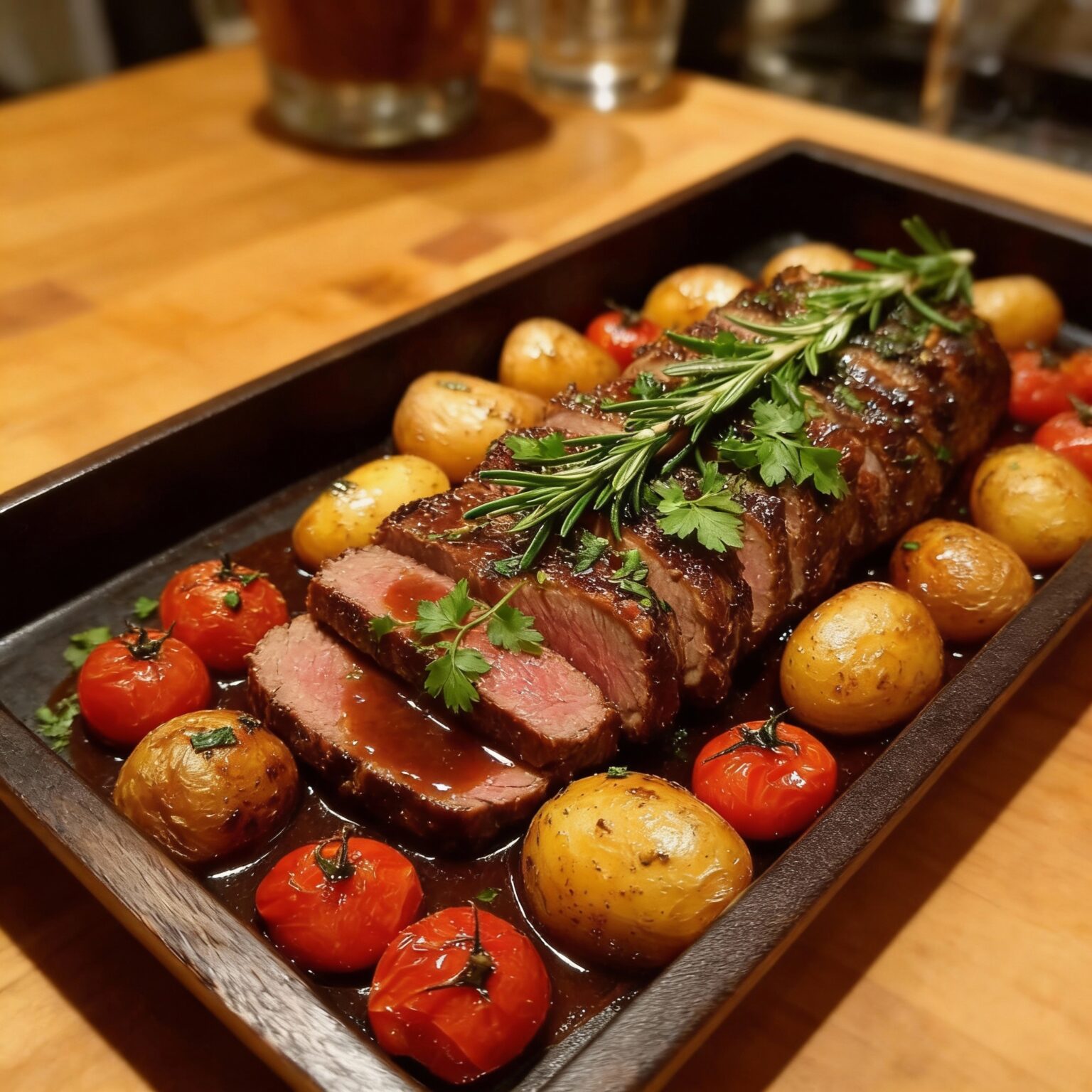
Elevate any meal to an extraordinary dining experience with this sensationalSlow-Roasted Beef Tenderloin. Renowned for its unparalleled tenderness and rich, buttery flavor, beef tenderloin is a true culinary gem, and this slow-roasting method ensures it’s cooked to perfection every time. Encased in a fragrant crust of garlic, rosemary, and thyme, this impressive roast emerges from the oven incredibly juicy, with a delicate pink center, ready to be the show-stopping centerpiece of your holiday feast, celebratory dinner, or any occasion that calls for something truly special. It’s surprisingly simple to prepare, letting the quality of the beef shine through with minimal fuss and maximum impact.
Ingredients:
For the Beef Tenderloin:
- 1 whole beef tenderloin (about 3-4 lbs), trimmed of silver skin and excess fat
- 3 tablespoons olive oil
- 4 cloves garlic, minced (or 1 tablespoon garlic powder for easier spreading)
- 2 teaspoons salt
- 1 teaspoon freshly ground black pepper
- 1 teaspoon dried thyme (or 1 tablespoon fresh thyme leaves, chopped)
- 1 teaspoon dried rosemary (or 1 tablespoon fresh rosemary, finely chopped)
- 1 teaspoon onion powder
For Garnish (Optional):
- Fresh sprigs of rosemary or thyme
Step-by-Step Instructions:
- Prepare the Beef Tenderloin:
- Remove the beef tenderaway from the refrigerator about 1 hour before cooking to allow it to come to room temperature. This promotes more even cooking.
- Pat the tender away thoroughly dry with paper towels. This helps create a beautiful crust.
- If your tenderloin has a thinner “tail” end, you can tuck it under and tie it with kitchen twine (every 1-2 inches) to create a uniform thickness. This ensures even cooking from end to end.
- Season the Tenderloin:
- In a small bowl, combine the olive oil, minced garlic, salt, black pepper, dried thyme, dried rosemary, and onion powder. Mix well to form a paste.
- Rub this herb and garlic mixture generously all over the entire surface of the beef tenderloin, ensuring it’s completely coated.
- Sear the Tenderloin (Optional but Recommended):
- This step adds a beautiful crust and locks in flavor. You can skip it for slightly less effort.
- Heat a large, oven-safe skillet (cast iron works great) over medium-high heat until very hot.
- Add 1 tablespoon of olive oil to the hot skillet (if you didn’t already coat the roast generously).
- Carefully sear the tenderloin for 2-3 minutes per side, until deeply browned all over.
- Remove from heat.
- Slow Roast the Tenderloin:
- Place the seared tenderaway on a roasting rack set inside a roasting pan. If you skipped searing, place the raw seasoned tender away on the rack.
- Insert an oven-safe meat thermometer into the thickest part of the tenderloin, ensuring it doesn’t touch any bone (if present, which is unlikely for tenderloin).
- Transfer the roasting pan to a preheated oven set to a lower temperature, typically around 275-300°F (135-150°C).
- Roast for approximately 45-75 minutes, depending on the thickness of your tenderness and your desired doneness.
- For Rare:Remove when internal temperature reaches 120-125°F (49-52°C)
- For Medium-Rare:Remove when internal temperature reaches 125-130°F (52-54°C)
- For MediumRemove when internal temperature reaches 130-135°F (54-57°C)
- Remember, the temperature will rise by 5-10°F (3-5°C) while resting.
- Rest the Tenderloin:
- Once the tenderloin reaches your desired internal temperature, carefully remove it from the oven and transfer it to a cutting board.
- Loosely tent it with aluminum foil and let it rest for at least 10-15 minutes (or up to 20 minutes for larger roasts). This crucial step allows the juices to redistribute throughout the meat, resulting in an incredibly tender and juicy roast.
- Slice and Serve:
- Remove any kitchen twine. Slice the beef tenderloin into thick, even medallions.
- Garnish with fresh sprigs of rosemary or thyme, if desired.
- Serve immediately and prepare for compliments!
Tips, Variations, and Storage:
- Trimming:If your tenderloin isn’t pre-trimmed, remove the silver skin (a tough membrane) and any large pockets of fat. You can ask your butcher to do this for you.
- Doneness:Beef tenderloin is best served rare to medium-rare to maintain its tenderness and flavor. Overcooking will dry it out. An instant-read thermometer is your best friend here.
- Garlic:For a milder garlic flavor, you can use garlic powder instead of minced fresh garlic, which can sometimes burn on the outside.
- Crust:For an even more pronounced crust, you can increase the initial searing time slightly or broil the tenderloin for 2-3 minutes at the very end after roasting (watch carefully!).
- Sauce Options:Beef tenderloin is fantastic with a simple pan sauce made from the drippings, a red wine reduction, a creamy horseradish sauce, or a classic béarnaise sauce.
- Leftovers:Slice leftover tenderloin thinly for amazing sandwiches, salads, or a quick stir-fry. Store in an airtight container in the refrigerator for up to 3 days.
Pairings:
- Wine:A sophisticated cut like beef tenderloin deserves a great wine. Cabernet Sauvignon, Merlot, Pinot Noir, or a fine Bordeaux are excellent choices.
- Potatoes:Roasted baby potatoes, creamy mashed potatoes, or gratin dauphinois are classic accompaniments.
- Vegetables:Steamed asparagus with Hollandaise, sautéed green beans with almonds, roasted Brussels sprouts, or creamed spinach all pair beautifully.
- Salad:A simple green salad with a light vinaigrette to cut through the richness.
Quick Info:
- Prep Time:15 minutes (plus 1 hour for coming to room temperature)
- Cook Time:45-75 minutes (depending on size and desired doneness)
- Rest Time:10-15 minutes
- Total Time:Approximately 1 hour 45 minutes – 2 hours
- Servings:6-8 (for a 3-4 lb tenderloin)
- Kitchen:American / European Fine Dining
- Effort Level:Medium (impressive, but not overly complex)